

Blog
Investigating NAD+: What Studies Have Revealed So Far
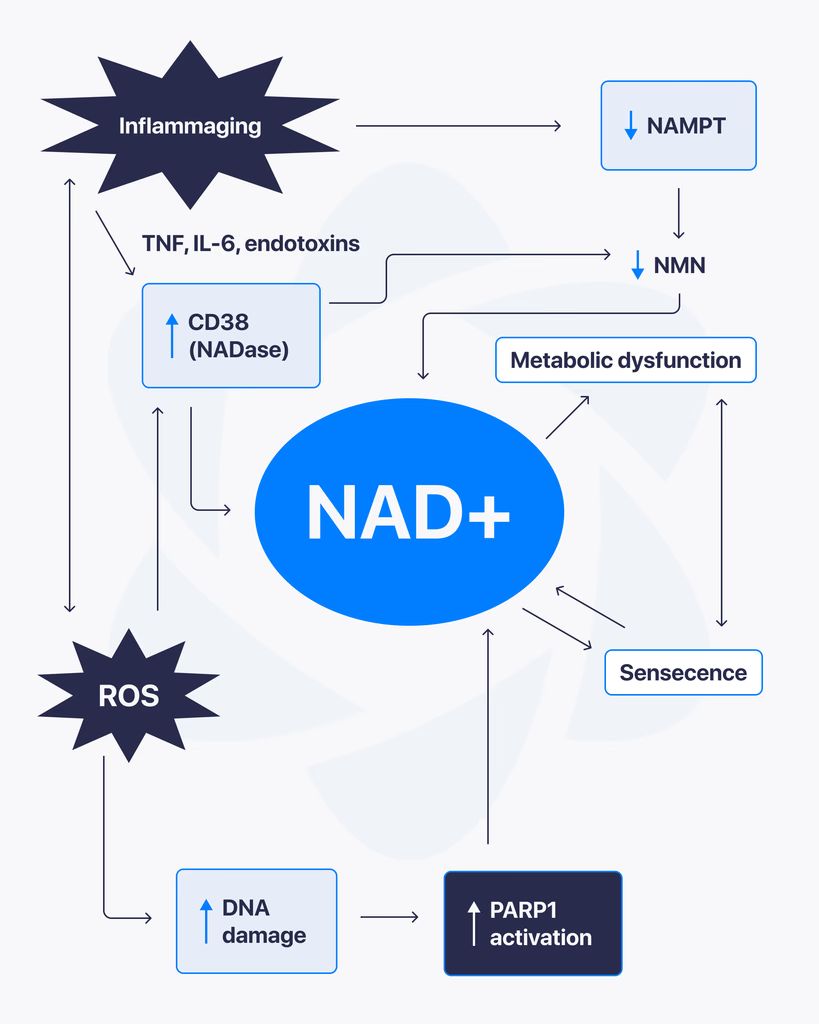
What Is NAD+?
Nicotinamide adenine dinucleotide (NAD+) is a coenzyme found in all living cells. It cycles between oxidized (NAD+) and reduced (NADH) forms, shuttling electrons during cellular reactions. Because it is required for energy production and enzyme activity, NAD+ is considered a central molecule in cellular metabolism.
How Has NAD+ Been Studied?
NAD+ has been examined across multiple levels of research:
-
In vitro assays have explored how NAD+ interacts with enzymes, such as sirtuins and PARPs.
-
Animal models have investigated how NAD+ levels change in tissues during aging, stress, or nutrient shifts.
-
Human studies often measure circulating NAD+ or related metabolites, sometimes in the context of supplementation with precursors like nicotinamide riboside (NR) or nicotinamide mononucleotide (NMN).
(Reference: Covarrubias et al., 2021)
Key Roles of NAD+ in Cells
Research has identified several fundamental roles for NAD+:
-
Energy Production – Serves as a cofactor in glycolysis, the TCA cycle, and oxidative phosphorylation.
-
DNA Repair – Consumed by PARP enzymes during repair of damaged DNA strands.
-
Gene Regulation – Provides substrate for sirtuins, which influence chromatin structure and gene expression.
-
Stress Response – Helps regulate cellular defense systems during oxidative and metabolic stress.
(Reference: Canto et al., 2015)
What Researchers Have Observed
Studies over the last two decades have highlighted consistent patterns:
-
Decline With Age – NAD+ levels are reported to decrease in tissues of animals and humans over time.
-
Tissue Variability – NAD+ concentrations differ between organs, with high demand in energy-intensive tissues such as muscle, brain, and liver.
-
Precursor Response – Trials with NR or NMN supplementation in humans have measured increases in NAD+ metabolites, though results vary by dose and duration.
-
Dynamic Regulation – Environmental stress, diet, and exercise all influence NAD+ turnover, making it a sensitive indicator of metabolic state.
(Reference: Yoshino et al., 2018)
