

Blog
TB-500 & Hair Follicle Studies: What Research Says
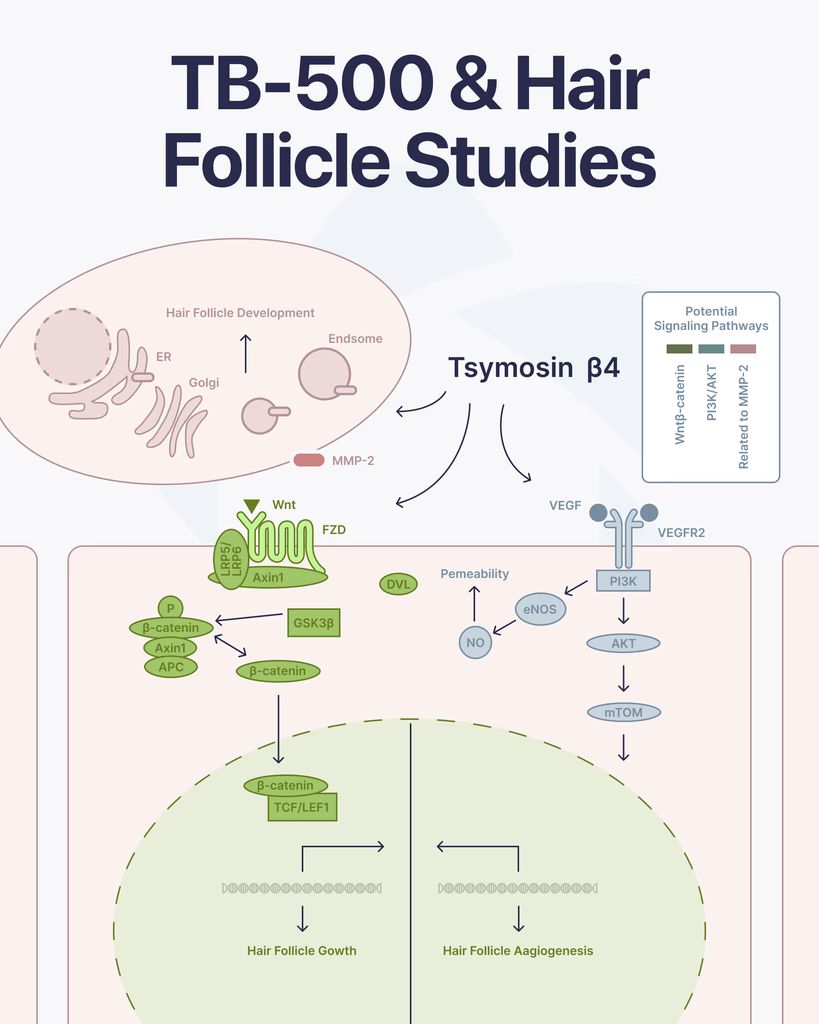
What Is TB-500?
TB-500 is a synthetic peptide that mirrors a portion of thymosin beta-4, a naturally occurring protein found in nearly all human and animal cells. Researchers became interested in TB-500 for its potential role in cellular migration, tissue repair, and angiogenesis, leading to studies across wound healing, cardiac models, and hair follicle biology.
(Reference: Goldstein et al., 2005)
Why Study TB-500 and Hair Follicles?
Hair follicle growth and cycling depend on cell migration, angiogenesis, and extracellular matrix remodeling — processes in which thymosin beta-4 has been implicated. Since TB-500 is derived from thymosin beta-4, researchers have explored whether it might influence follicle biology in experimental settings.
(Reference: Philp et al., 2004)
Key Research Observations
Published studies on thymosin beta-4 and its fragments, including TB-500, report several relevant findings:
-
Follicle Stem Cell Activity – In murine models, thymosin beta-4 has been shown to activate stem cells in the hair follicle bulge region, supporting initiation of new growth cycles.
-
Angiogenesis and Vascularization – Studies document increased blood vessel formation around follicles, suggesting improved nutrient delivery during growth phases.
-
Wound Healing Context – Because follicle activation often parallels wound healing pathways, TB-500 has been studied in skin injury models, where peptide application correlated with faster closure and follicle regeneration.
(Reference: Smart et al., 2007)
Research Applications
In laboratory and preclinical contexts, TB-500 has been used to:
-
Explore signaling pathways in dermal and follicular stem cells.
-
Study the overlap between angiogenesis and follicle cycling.
-
Test wound repair models where hair follicle regeneration is one outcome measure.
(Reference: Goldstein et al., 2012)
