

Blog
What is MOTS-c?
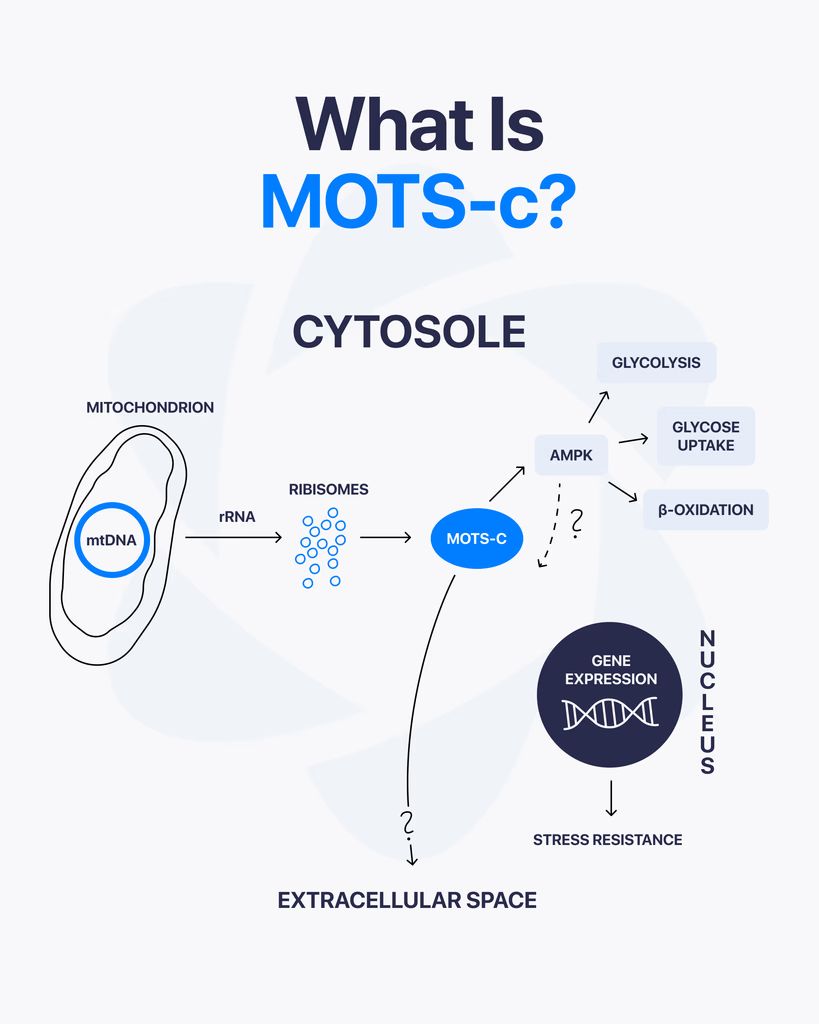
What Is MOTS-c?
MOTS-c (Mitochondrial Open Reading Frame of the 12S rRNA type-c) is a small peptide encoded within the mitochondrial genome. Unlike most peptides, which are coded in nuclear DNA, MOTS-c originates from mitochondrial DNA, highlighting the organelle’s role not only in energy metabolism but also in signaling functions. This discovery has expanded interest in mitochondrial-derived peptides as potential regulators of cellular processes.
How Has MOTS-c Been Studied?
Research on MOTS-c spans in vitro, animal, and human models:
-
Cell culture studies have examined how MOTS-c influences metabolic pathways, including glucose utilization and stress responses.
-
Animal models have been used to explore its role in energy balance, skeletal muscle activity, and mitochondrial function.
-
Human studies have measured circulating MOTS-c levels in contexts such as exercise and aging, providing data on how the peptide behaves under different physiological states.
(Reference: Reynolds et al., 2021)
Key Research Observations
Across published studies, several observations about MOTS-c have emerged:
-
Metabolic Regulation – MOTS-c interacts with pathways related to AMPK signaling and folate metabolism.
-
Stress Response – Levels of MOTS-c change under cellular and environmental stress conditions, suggesting a role in adaptive responses.
-
Age-Related Patterns – Research has noted that MOTS-c concentrations decline with age in some tissues and circulating samples.
-
Exercise Association – Human studies have measured increases in MOTS-c following acute bouts of physical activity.
(Reference: Zempo et al., 2021)
Common Research Applications
MOTS-c is currently studied in laboratory settings to:
-
Investigate mitochondrial-nuclear communication pathways.
-
Analyze changes in peptide signaling during metabolic stress.
-
Explore mitochondrial contributions to age-related cellular changes.
-
Develop models of exercise-induced signaling molecules.
